You’ve probably held a personalized gift that missed. A mug with a grainy photo baked onto the gloss. A canvas where someone’s face went soft and pixelated. Colors cranked so hard the whole thing glowed. You handed it over, watched the polite smile, and knew. It was in a drawer within a month.
That fear is exactly why so many people default to a safe, forgettable gift instead of the meaningful one they actually want to give. So let’s take it apart. Here’s what really makes personalized photo gifts look cheap, how to sidestep the traps, and how turning your photo into a painting removes most of them.
Why most personalized photo gifts look cheap
Cheap usually isn’t about the photo you chose. It’s about what the product does to it.
Printing a literal photo onto an object magnifies every flaw. A phone snapshot that looks fine on a screen gets stretched across a two-foot canvas, and suddenly you can see the compression, the noise in the shadows, the slightly-off skin tones. Glossy surfaces add plasticky glare. And the biggest tell of all is oversaturation — factories push contrast and color so thumbnails “pop” in a listing, which reads as garish the moment it’s on your wall.
The other giveaway is the format itself. When something feels like it rolled off the same line as a thousand keychains and socks, no amount of “premium quality” in the description rescues it. Considered gifts don’t look mass-produced. They look chosen.
Start with the photo, not the product
The single biggest predictor of how the finished piece looks is the photo you start from. Sharpness matters more than age or camera — a well-lit shot from a five-year-old phone beats a dim, cropped one from yesterday.
A few things to look for: good light (window light or outdoors beats a dark room), a subject that fills a decent part of the frame, and an original file rather than a screenshot or something saved from a messaging app. Slight softness is fine once the photo becomes a painting. What you can’t rescue is a face that’s tiny in the frame or lost in shadow.
How a painting sidesteps the tackiness
A painting works differently from a photo print. It isn’t trying to be a flawless reproduction of your image, so it doesn’t get punished for the things a literal print exposes.
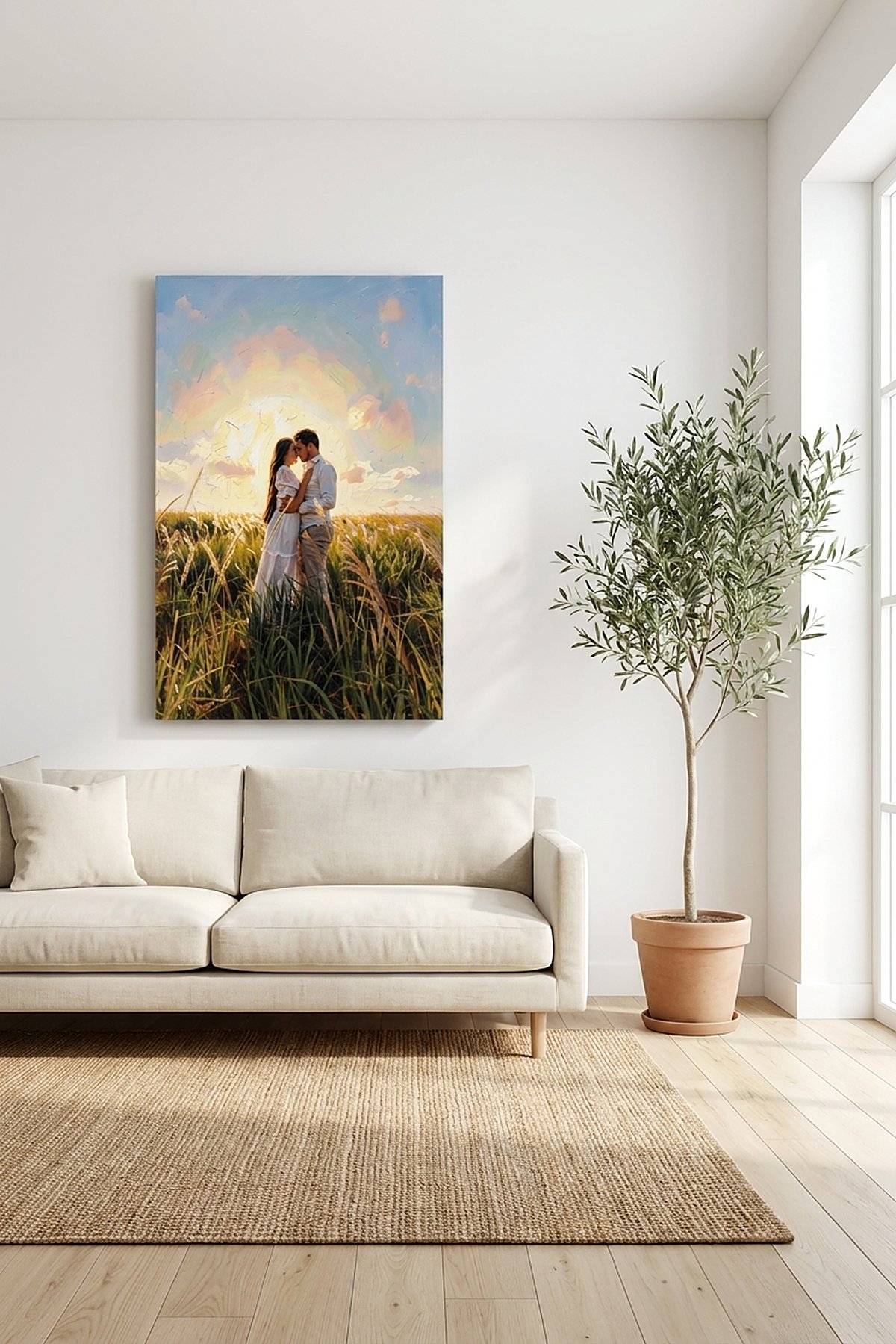
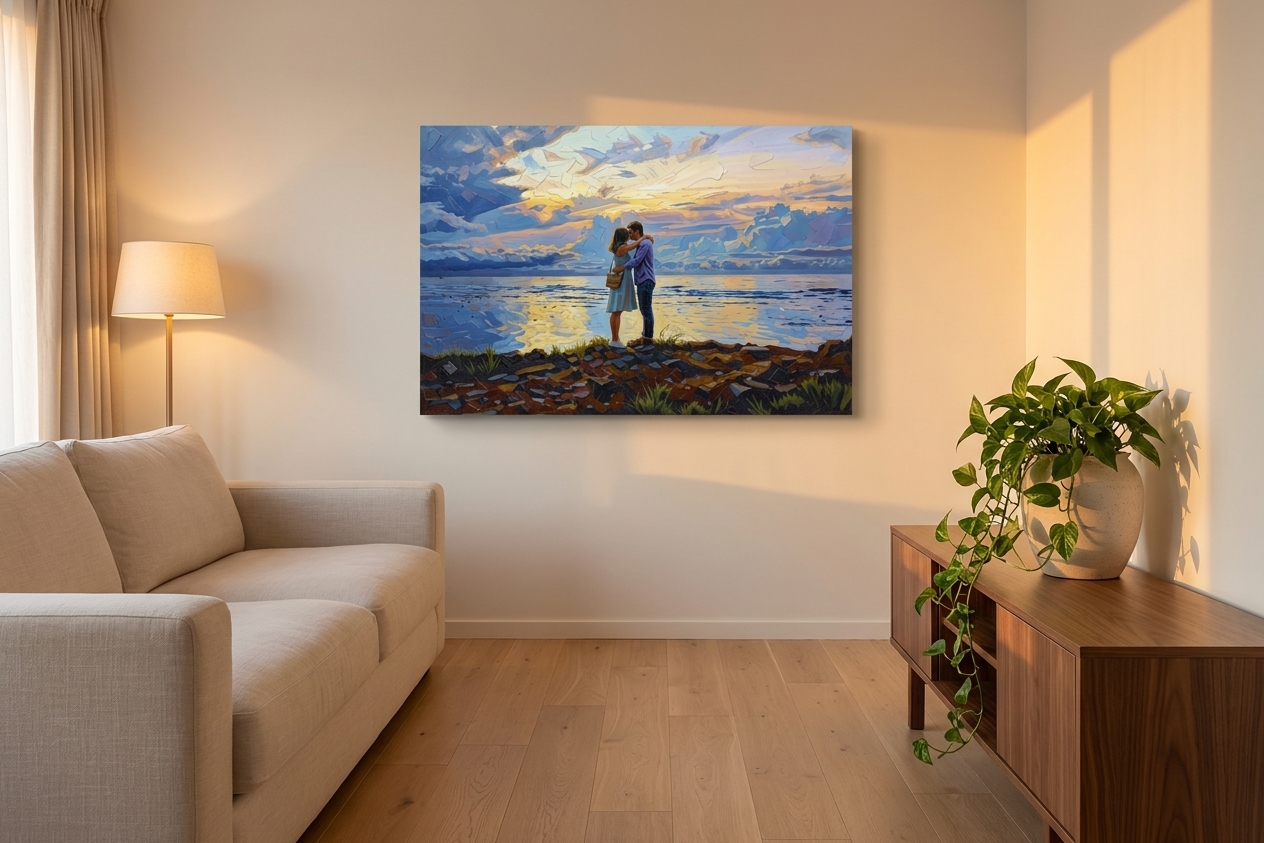
When your photo becomes an oil painting, brushwork and texture become the point. Softer areas of an older or lower-resolution photo read as painterly rather than as a mistake. Color gets interpreted with the restraint of a painting instead of the blown-out contrast of a factory print. The result looks composed and intentional — the opposite of the gas-station-gift feeling.
A painting is more forgiving, but it can’t invent detail that was never captured. It works with the light and shape that are already there, and turns them into something calmer. Look at what that shift does to an ordinary phone photo.

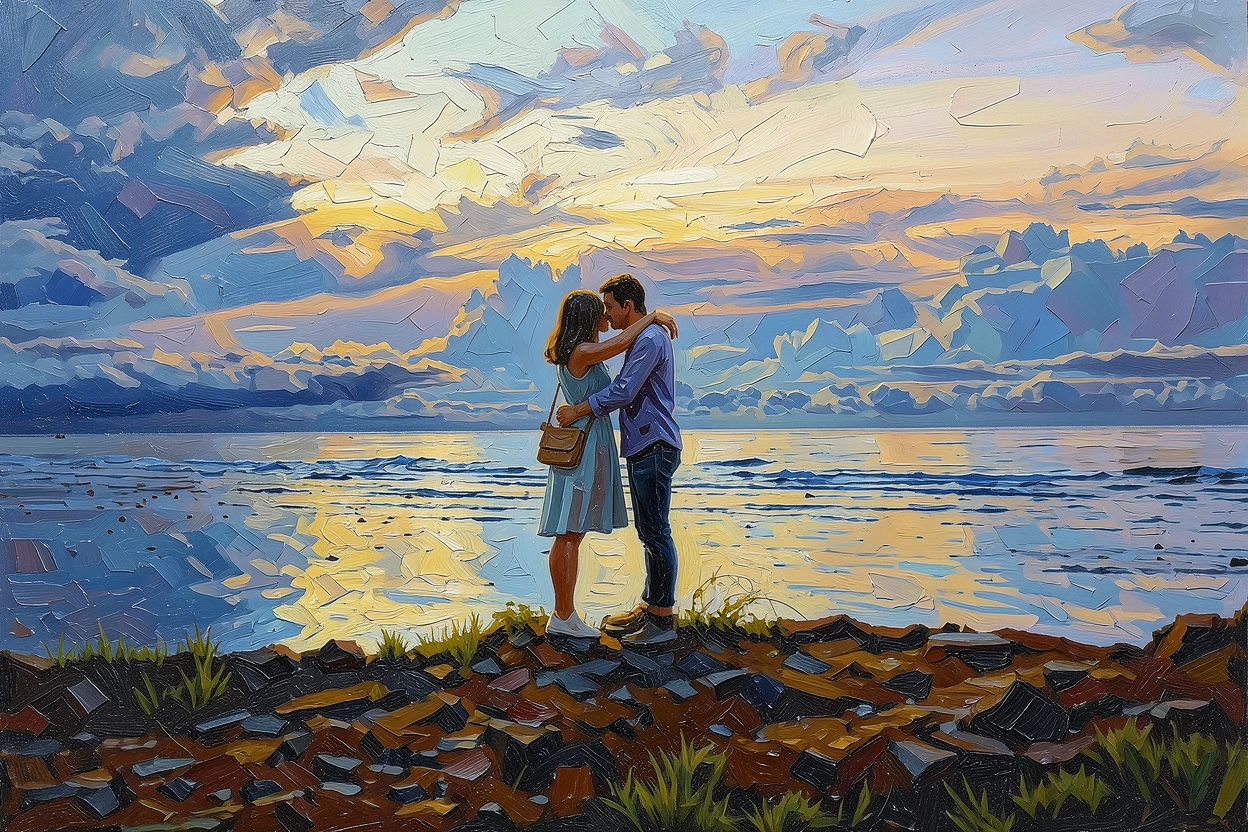
Source photo by Rudy1412 via Pixabay. After: generated with ReArt.
The source is a plain beach snapshot — a couple in silhouette at dusk. As a painting, the low light and simple composition become an asset. There’s mood instead of noise.
What it looks like in your home
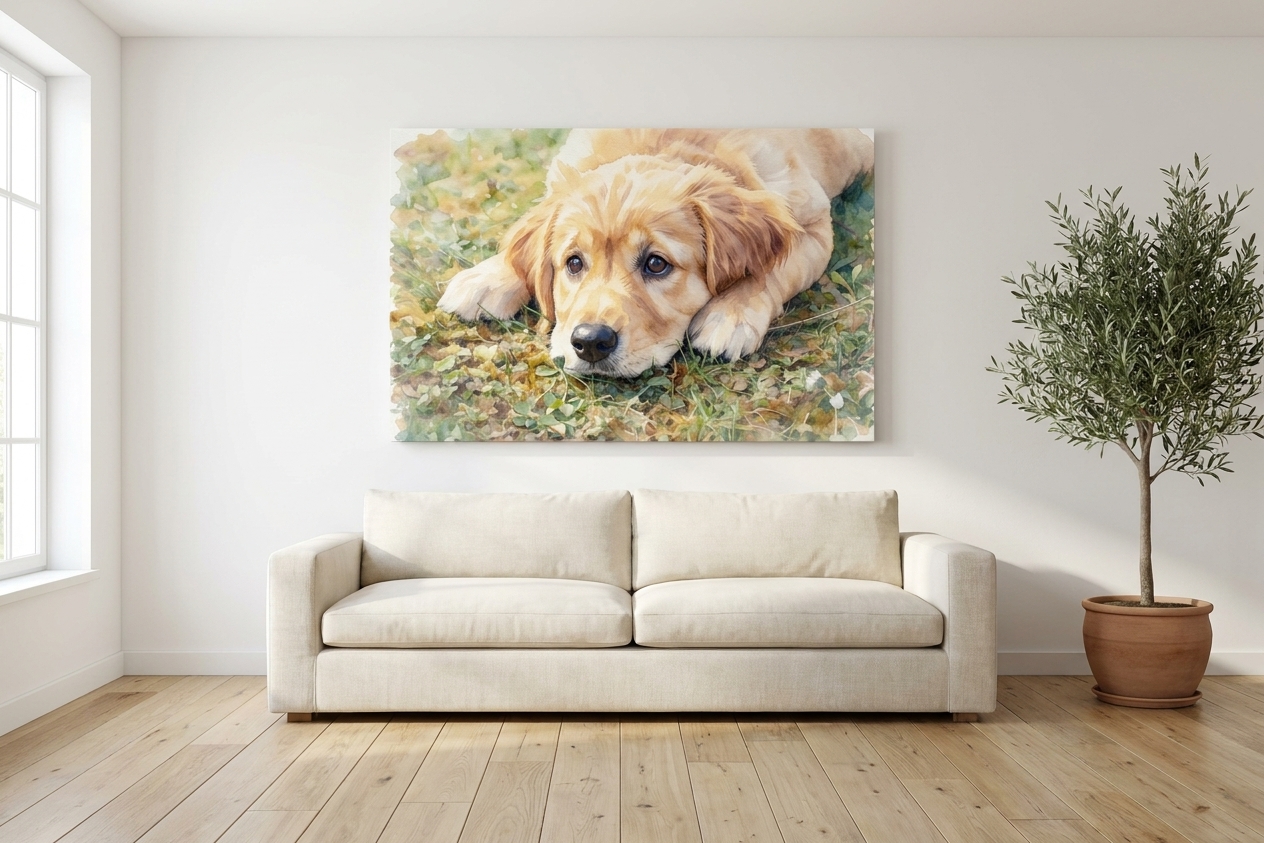
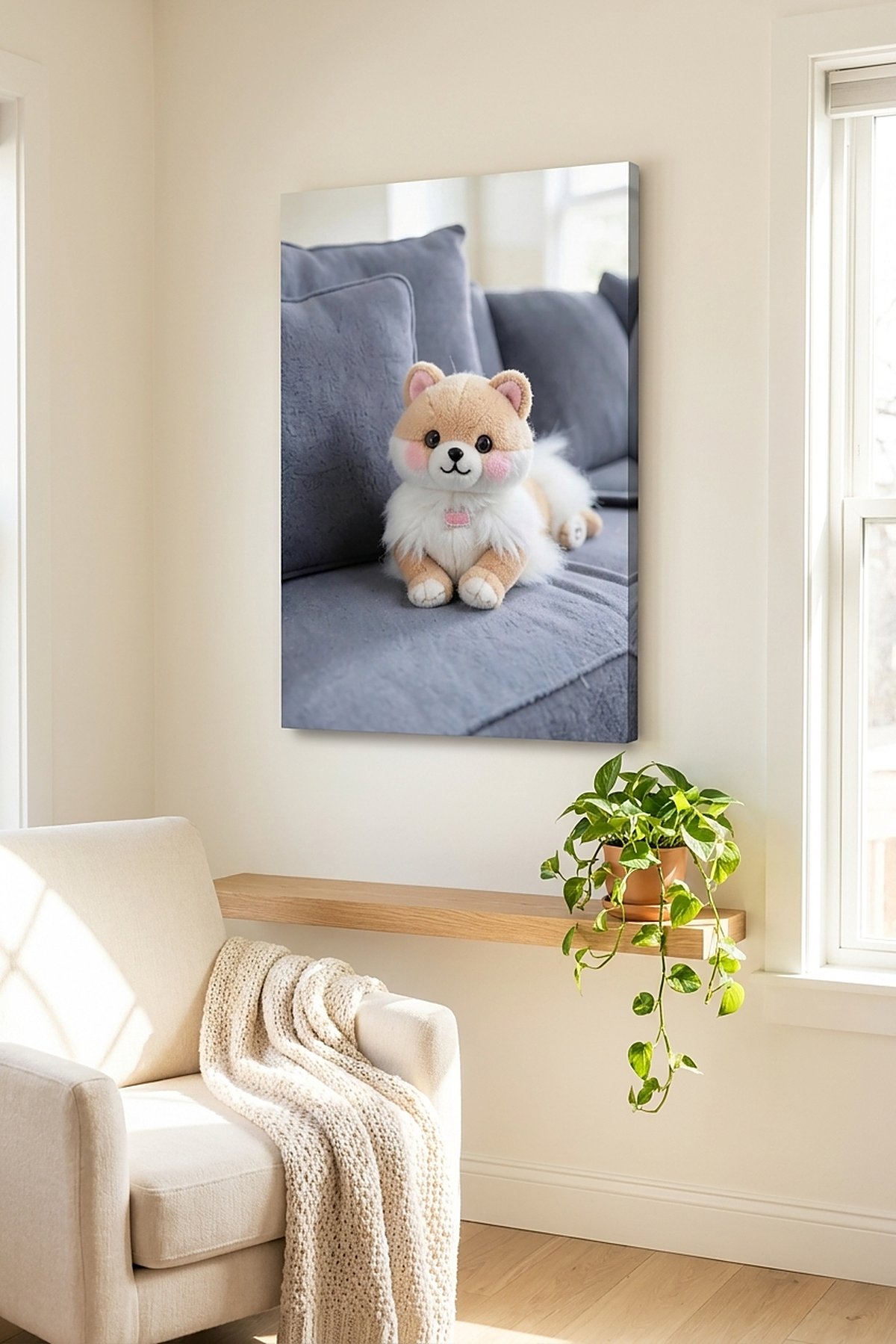
There are two formats, and they suit different rooms. Canvas has a textured, gallery-leaning surface that flatters brushwork and reads as a finished statement piece. A poster is flatter and cleaner, and slides neatly into a frame you already own.
Think about scale before you order. A small piece on a large wall looks like an afterthought. Hold up a sheet of paper at the size you’re considering and step back across the room — above a sofa or a bed, most people underestimate how big “right” actually is.
What “good” costs, and the part that removes the risk
Good materials and honest color cost more than a checkout-rack trinket, and that’s the point — you’re buying the one gift that lands, not a shelf of novelties.
Being honest about the work: ReArt’s paintings are AI-generated from your photo, then printed. No one is hand-painting at an easel, and pretending otherwise would be the exact overselling you’re trying to avoid.
Here’s the part that actually removes the risk. You see the painting rendered from your photo — and exactly what it costs — and approve both before you pay. No committing money to a mystery and hoping it turns out. If the interpretation isn’t right, you’re not stuck with it. That preview is what turns “I hope this works” into “I’ve seen it, and it’s right.”
Giving it with confidence
The reveal you’re picturing — the pause, the real reaction — comes from a gift that reads as considered. Not the most expensive thing in the room, but clearly the most thought-through: a painting made from a photo that matters, in a format that suits the wall it’s going on. Because each one is made to order from your photo, give yourself a little lead time before the occasion so it arrives with room to spare.
If you’ve got that one photo in mind, start there and see the painting before you decide anything: Create your custom painting at ReArt.