Personalized wall art doesn’t mean your own face over the sofa. That’s the version most people picture when they hear the phrase, and it’s a good part of why the wall above the couch is still bare six months later. The piece that works is usually a place, not a person — somewhere you stood, rendered graphically enough that a guest reads it as a design object and only you know it’s a memory.
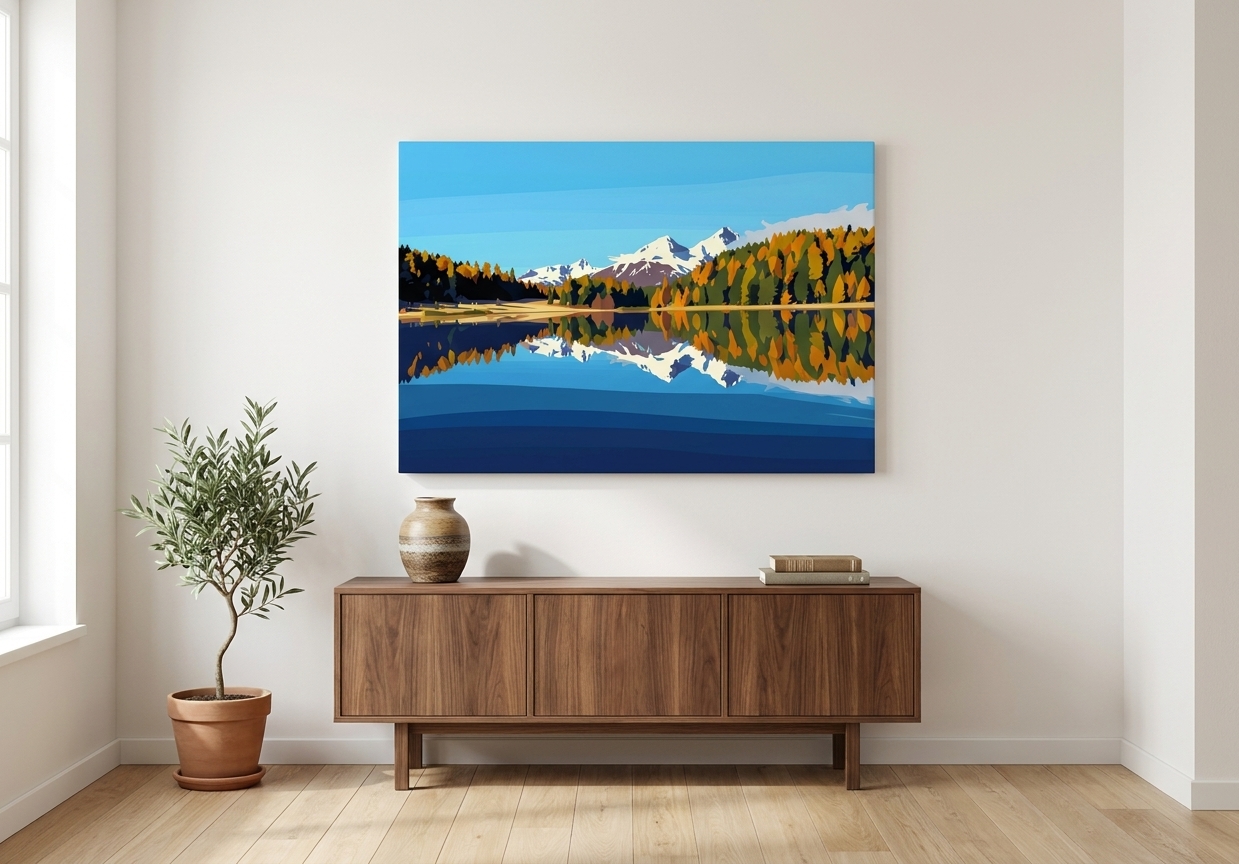
Here’s the mechanic. A landscape with the bones of a hundred photos already on your phone — a mountain lake, autumn larches, a still reflection — put through a flat-colour poster style:
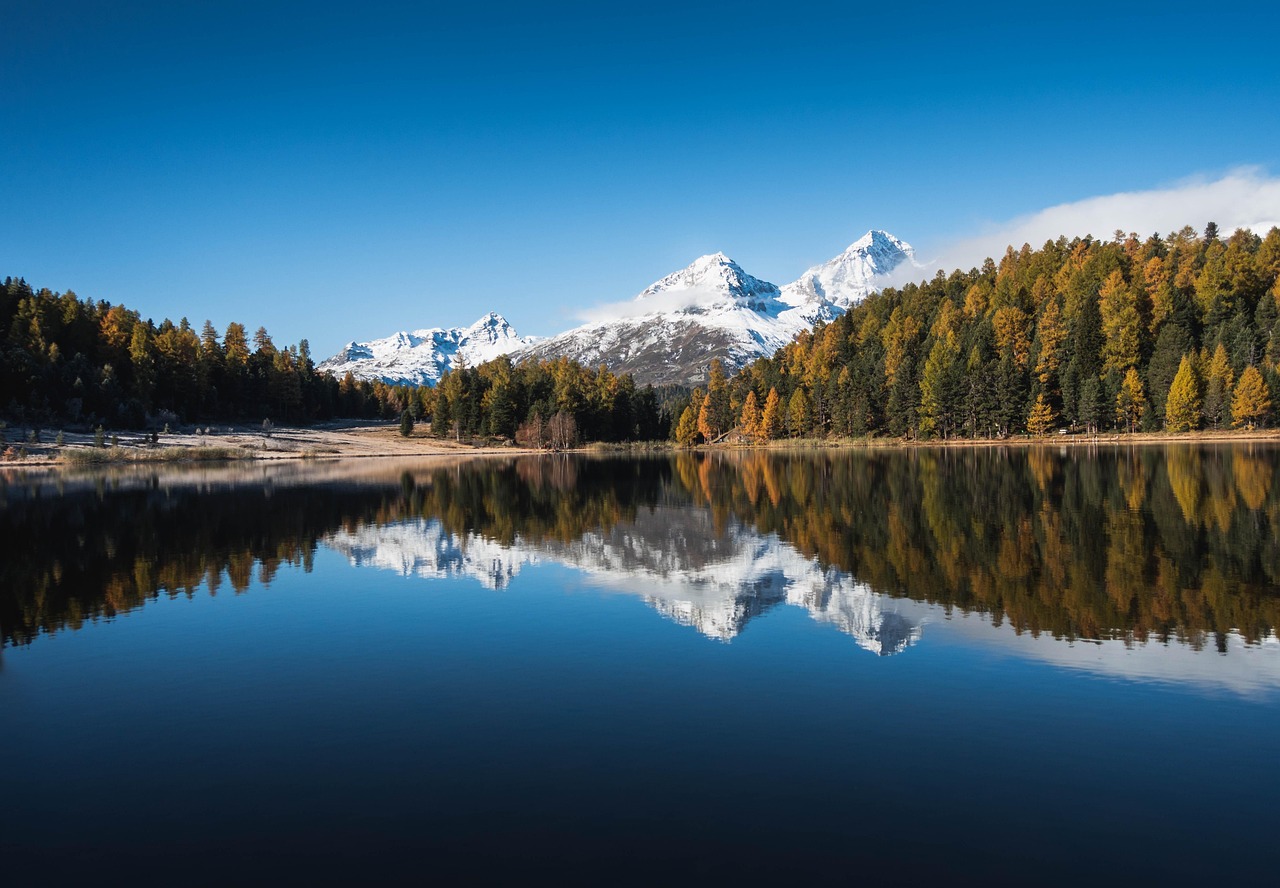
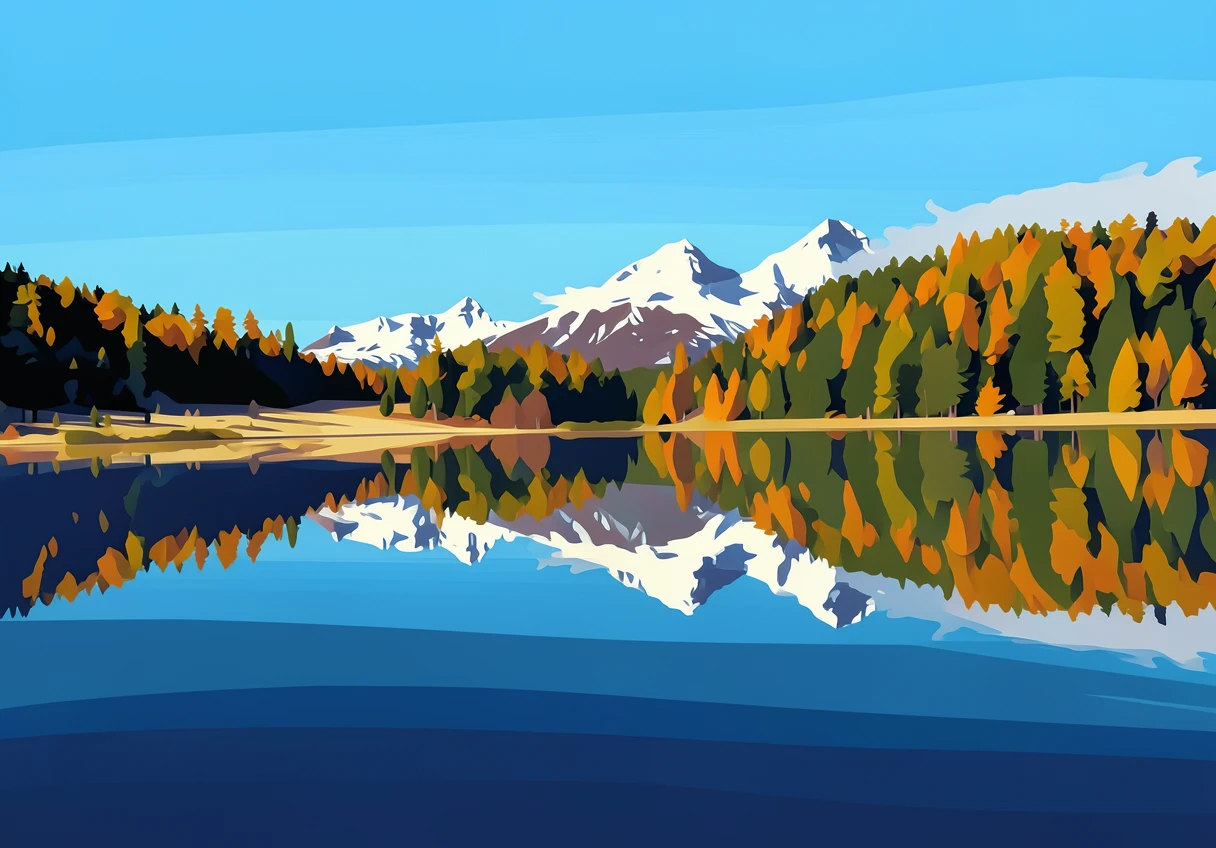 Photo Poster
 Source photo by Nature_Brothers via Pixabay. After: generated with ReArt.
No faces. Nothing to explain. It still belongs to whoever took it.
What makes a piece a statement instead of filler
Not price. Not subject. Two things.
Scale. A piece that’s too small for its wall reads as an apology, no matter what’s on it.
Graphic readability. Stand in your doorway and look at the wall. From four metres out you can’t see detail — you see shapes and blocks of colour. A piece that resolves into three or four strong shapes at that distance holds the room. A piece that’s a fine mush of tone at that distance is wallpaper. That’s the test, and you can run it on a photo before you commit to anything.
It’s also why a big photo print so often disappoints. Photographs are made of detail — thousands of small tonal steps, all competing. Print one big and it doesn’t read louder from the doorway, it reads busier: the detail that rewards you at arm’s length is mush at four metres. A painting or a graphic rendering does the opposite. It throws detail away on purpose and keeps the shapes. Flat colour survives scale — that’s what happens when you reduce an image to fewer, bolder decisions.
Why personalized wall art works better with places than with people
A photo of your own face on your own wall is a statement about you, made to everyone who walks in. A landscape you took is a statement about somewhere you were. It never asks anyone to comment.
It’s also where the rendering behaves best. Faces carry a burden — everyone in the room knows what your partner looks like, so any drift reads as a mistake. A ridgeline and a treeline carry no such burden. Push a mountain into flat colour bands and it just becomes a better shape.
Personal doesn’t have to be legible to be personal. That’s what lets you hang something big without feeling exposed.
Which of your photos can carry a big wall
Open your camera roll and ignore the ones you love most. Sentiment is a bad predictor here. Look for silhouette:
- A horizon — sea, mountain ridge, a field with a treeline. Two or three bands, and one shape breaking them.
- A building — an arch, a facade, a bridge. Hard edges do a lot of work.
- One clear subject against clean space — a lone tree, a boat, a headland.
Rough rule: if you can describe the composition in a single sentence, it will carry.
The lake at the top was the first — a ridge, a treeline, water. Here are the other two. A building: one barn in a snowed-over field, rendered as an oil painting —
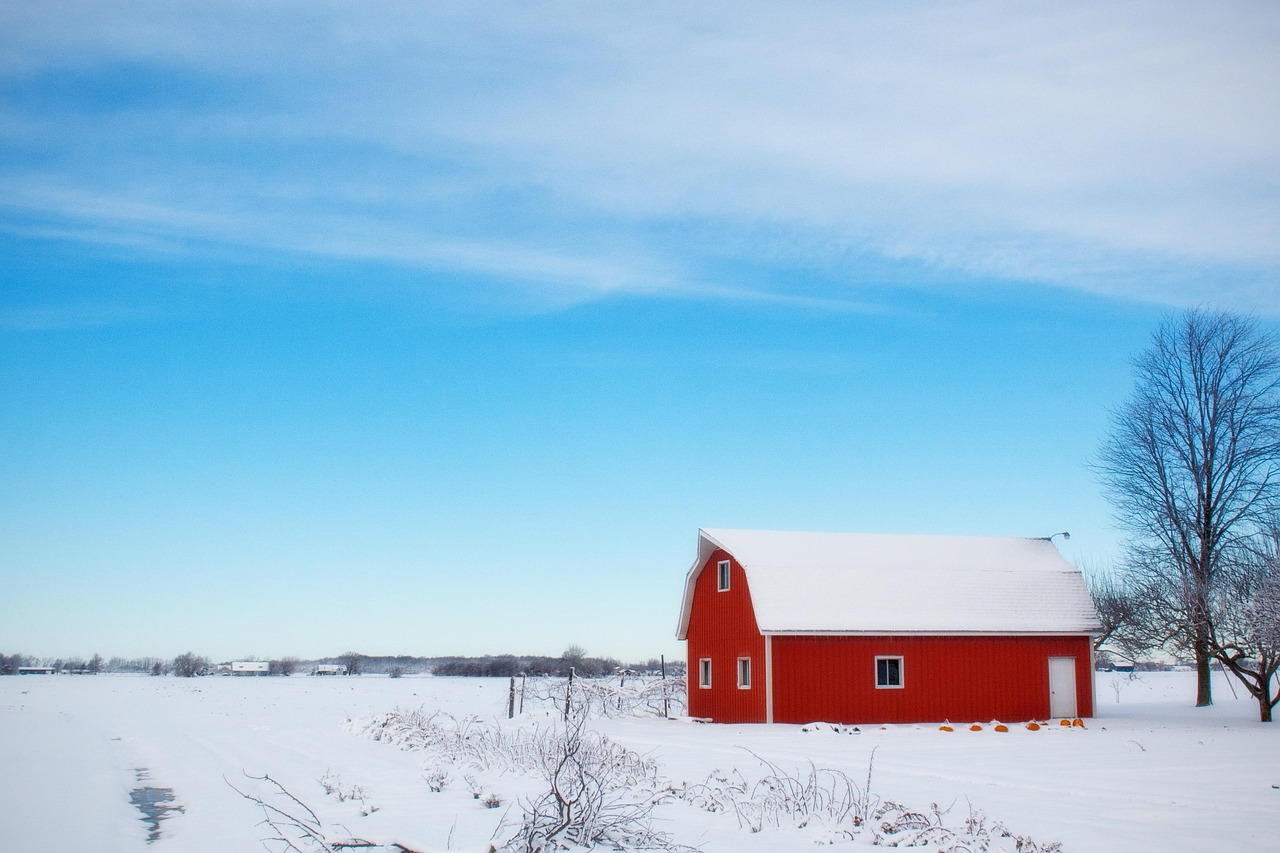
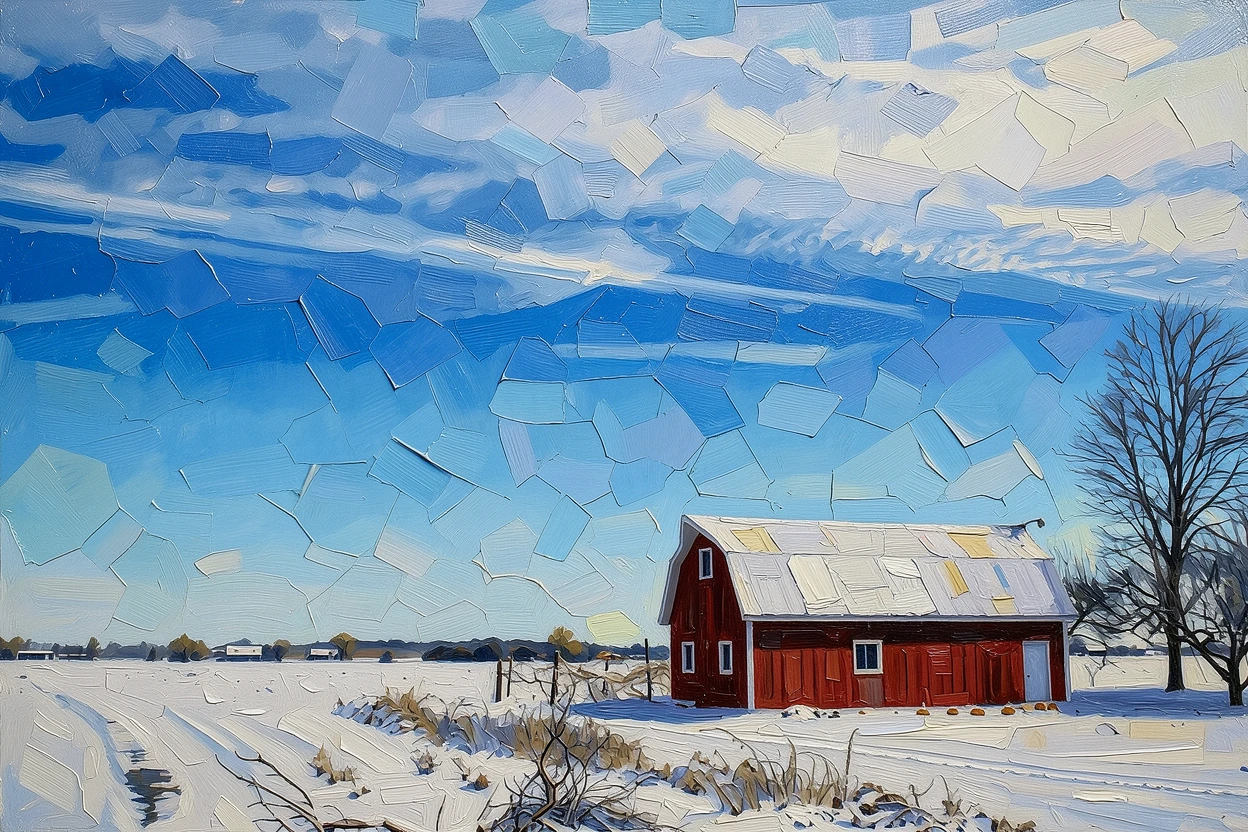 Photo Painting
 Source photo by JillWellington via Pixabay. After: generated with ReArt.
And one clear subject: a lone tree against a low sun, in a golden impressionist style —

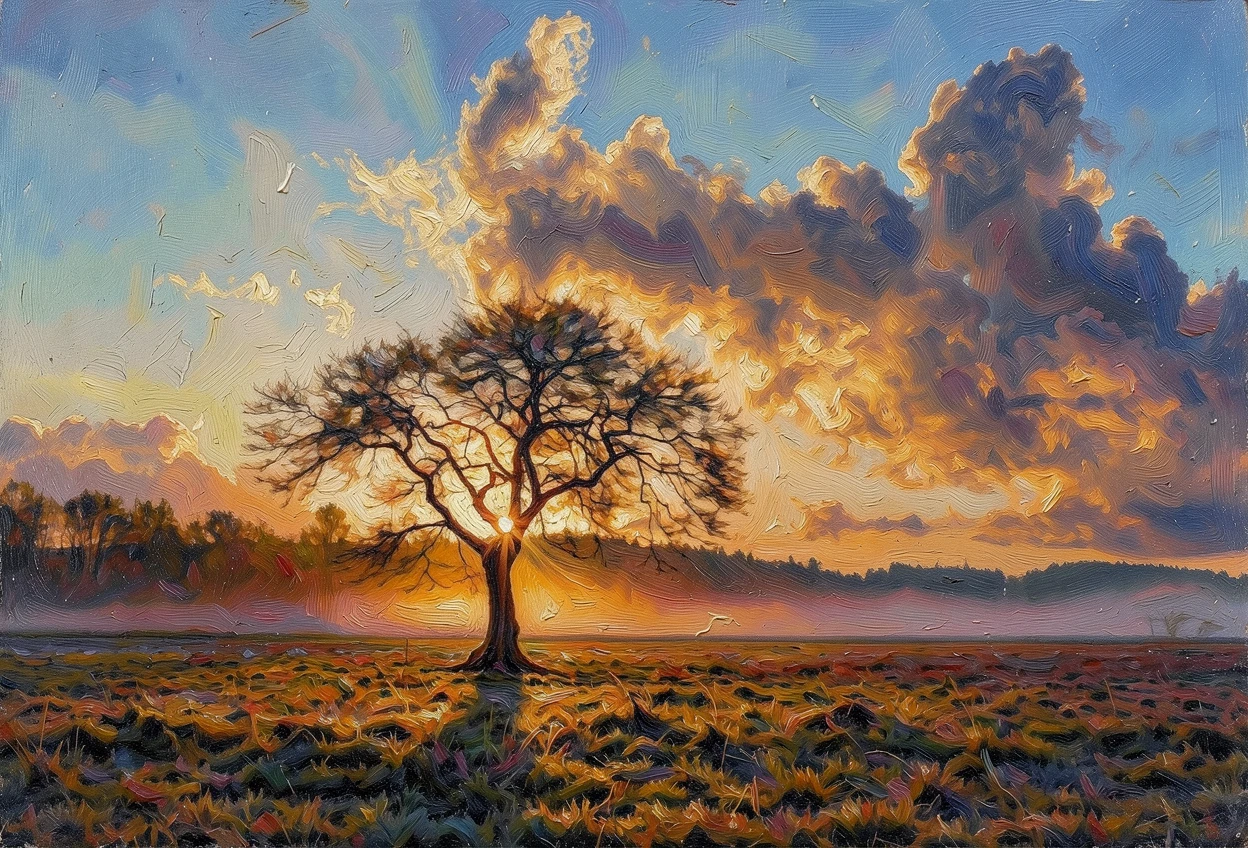 Photo Painting
 Source photo by mbll via Pixabay. After: generated with ReArt.
Three different photos, three different styles, one shared property: a silhouette you could describe with your eyes closed.
What fails is the busy candid. A restaurant table, six people, clutter behind them, mixed light. Lovely photo, bad statement piece — there’s no dominant shape, so from the doorway it’s noise. Same for anything shot in a dim room, or cropped and zoomed in hard. A flat-colour style needs shapes to flatten; it can’t invent structure that was never in the frame.
The counterintuitive part: your best photo is often the wrong one. The sunset with the incredible sky and nothing standing in front of it has nothing to hold onto. The plain shot of a headland does. The golden sky above only works because the tree is standing in it.
How big, actually — one number, not a range
Measure the furniture, not the wall. Multiply its width by 0.7. That’s your target width, and undersized art doesn’t read as modest — it reads as a placeholder.
Now the ceiling, before you get attached to a number: our largest canvas is 60 × 90cm. Hung landscape that’s 90cm of wall, and there is nothing above it. Run the rule backwards and 90cm lands on furniture about 130cm wide — a two-seater, a loveseat, a sideboard, the wall beside a bed. That’s where one piece of ours does the job properly.
Over a full 210cm three-seater, the rule wants 145cm and we stop at 90. That’s 0.43 of the sofa — by the test above, a placeholder. Worth knowing on this page rather than after you’ve paid for one.
For height, ignore the eye-level convention; that’s for a wall with nothing underneath it. Over furniture the rule is the gap: hang it so the bottom edge sits 15–20cm above whatever stands below it — the sofa back, the top of the sideboard.
One piece, not three. A cluster is a second design problem — spacing, alignment, how the images talk to each other — and three small pieces don’t add up to one big one anyway.
What actually arrives
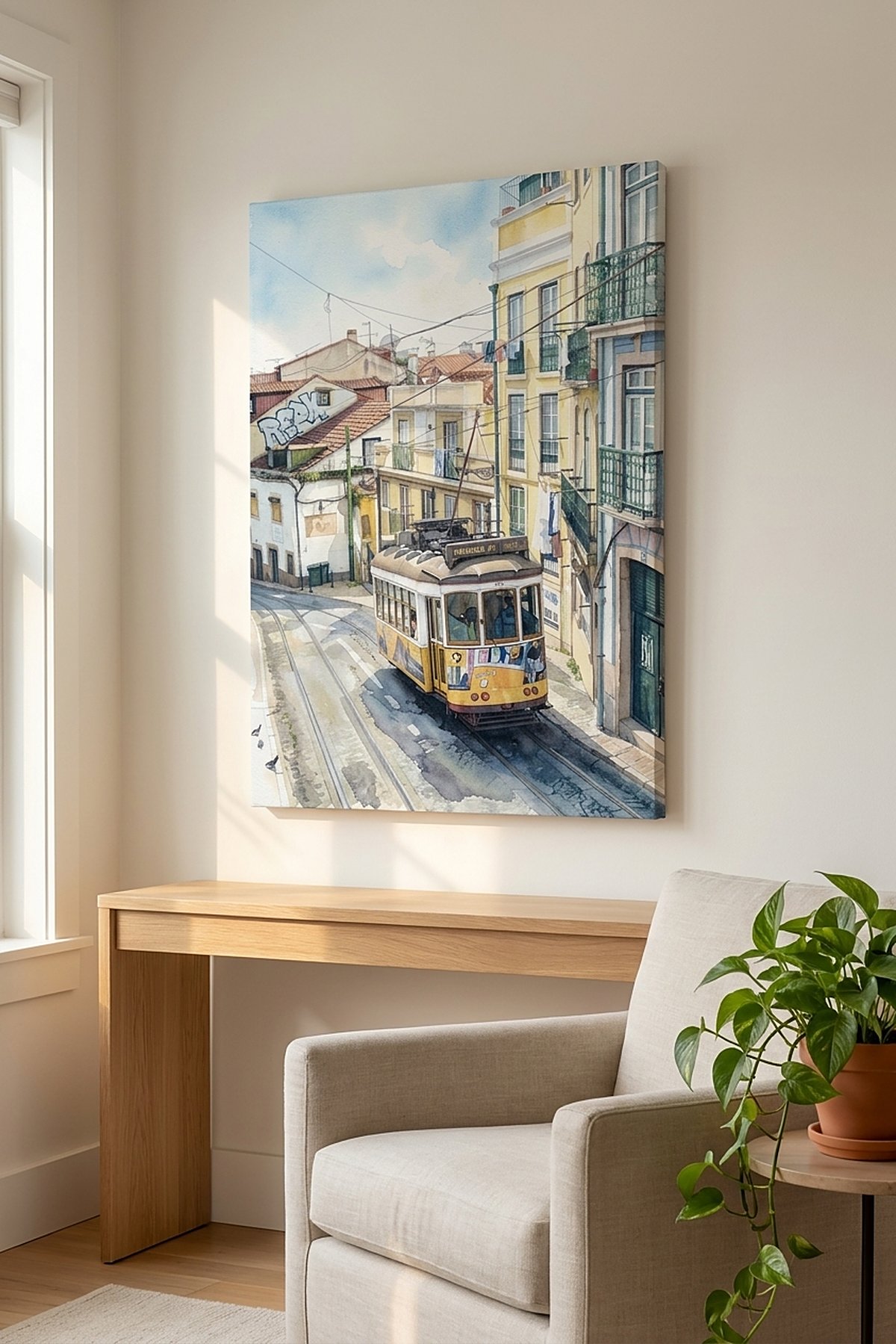
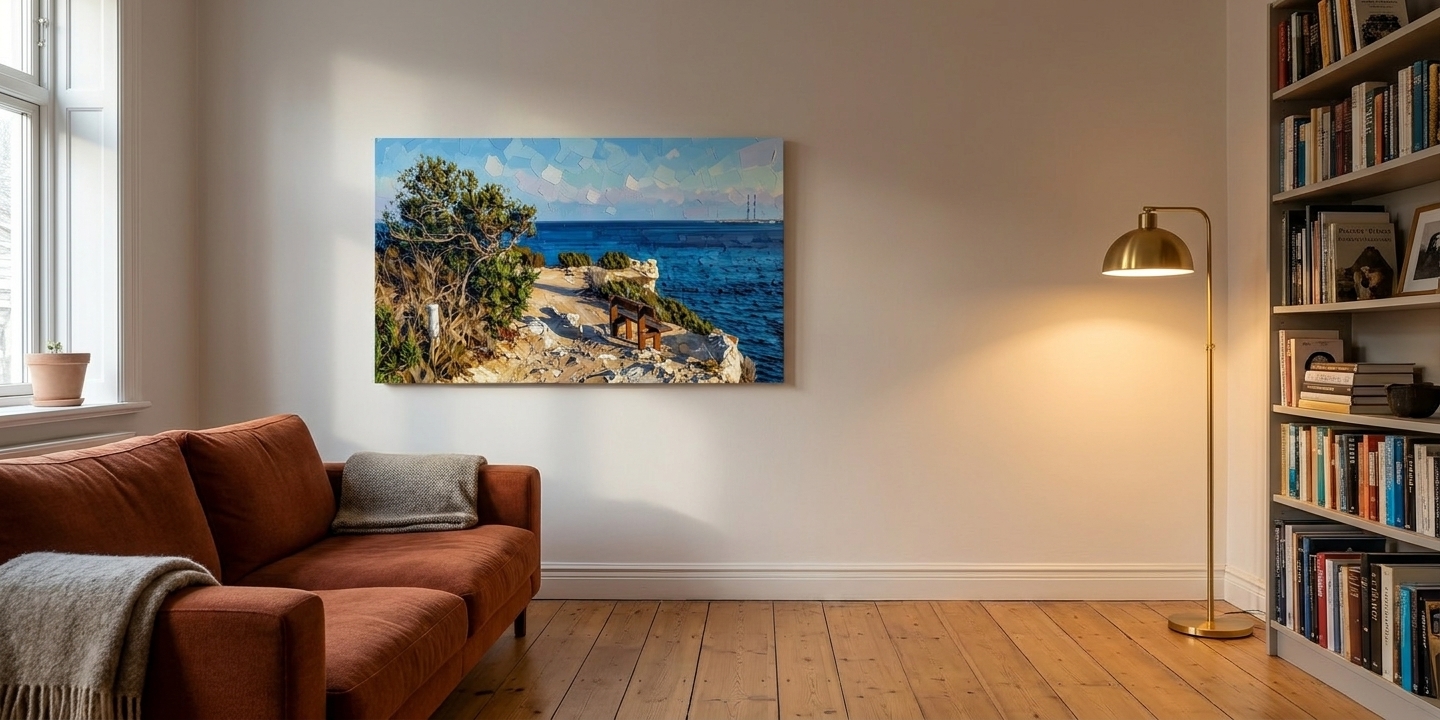
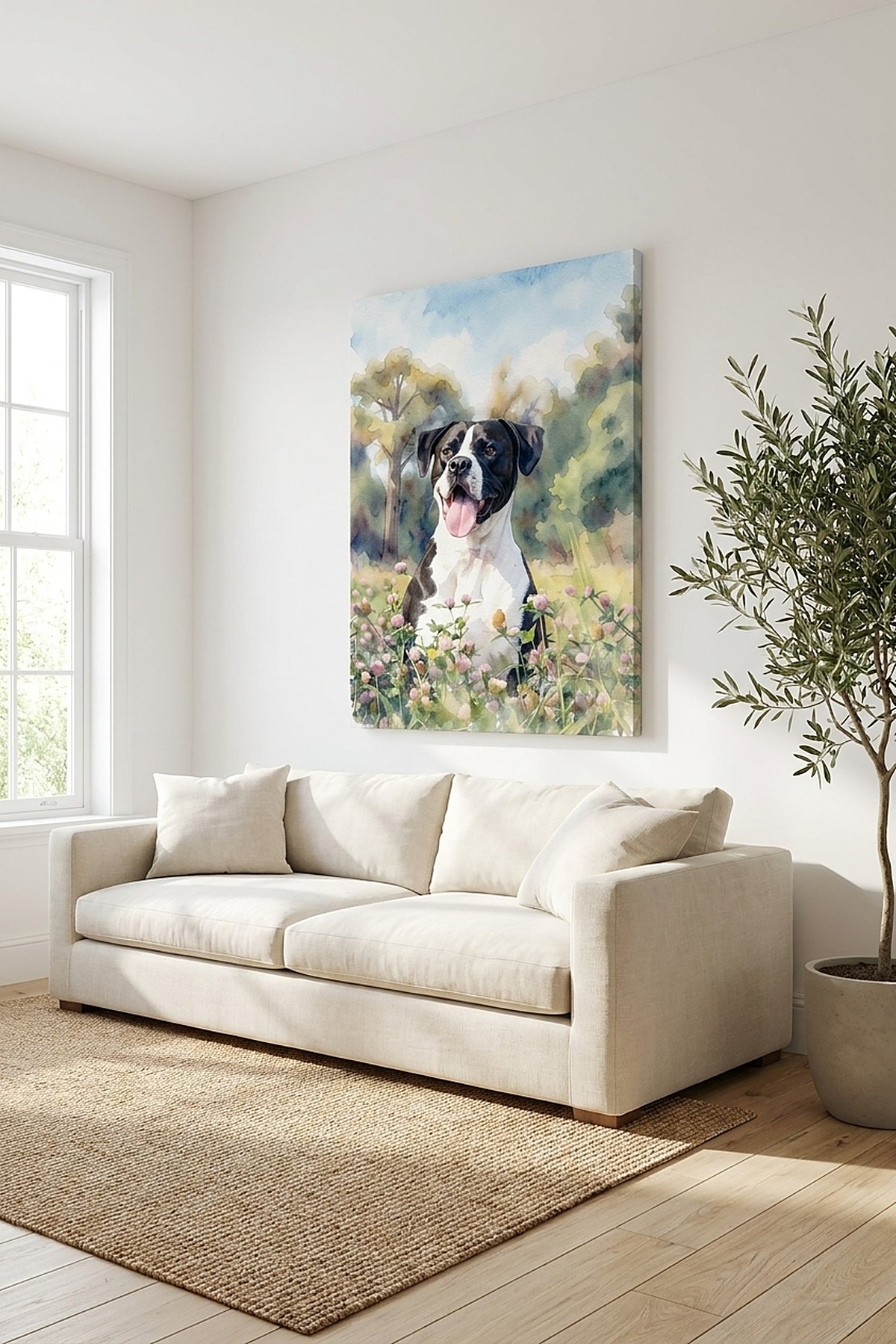
A single gallery-wrapped canvas: the artwork stretched over a wooden stretcher frame, the image continuing around the sides, no glass, no glare, ready to hang out of the box. The room at the top of this page is a render — the wall, the sideboard, the light, all invented — but it shows the arrangement honestly: our largest canvas over furniture it actually suits, no frame around it. The alternative is the same artwork as a poster on smooth paper, shipped rolled, for a frame you already own. Those are the two formats.
Being straight about the process: the artwork is AI-generated from your photo, then printed. Nobody is at an easel. Better you know that now than after it’s on your wall.
Living with it a year from now
The test isn’t the first week — you’ll like anything in the first week. It’s whether you still catch on it in March.
Generic art has a short half-life. You decode it once and you’re done. A piece built from your own photo works differently, and slightly oddly. To a guest it stays a graphic object: colour, shape, done. To you it keeps a second layer that doesn’t quite wear out, because you were there. That layer is invisible from the doorway, which is exactly the point. It doesn’t announce anything about you. It just quietly refuses to become furniture.
And on the try-hard question — nobody can tell. There’s nothing embarrassing about a mountain.
See it before you decide anything
The part that dissolves “what if I get this wrong”: you see the actual piece, made from your actual photo, on screen, before any money moves. Nothing prints until you approve it. If the render isn’t right, pick another photo or another style — you’re out ten minutes.
So go and find the horizon shot. Not the one with everyone’s faces in it. The one from the morning you got up early.