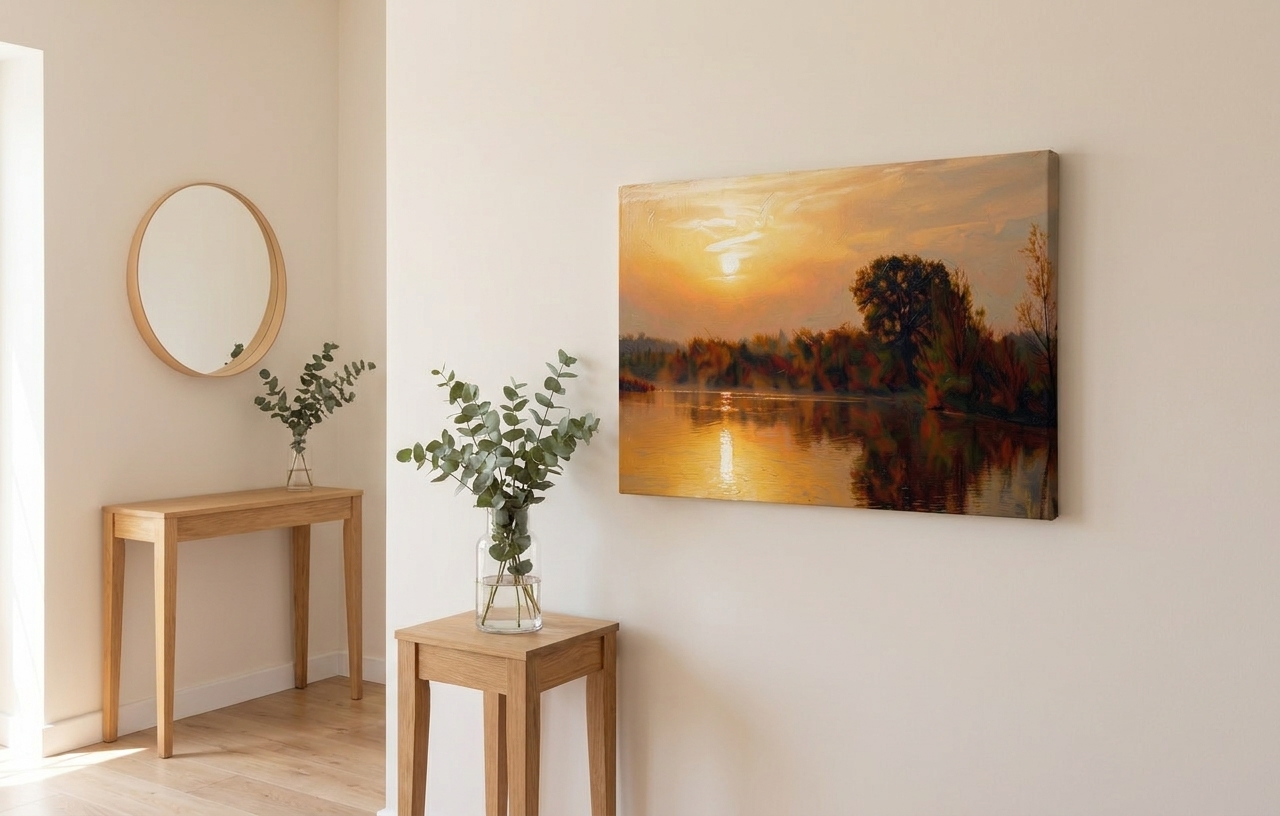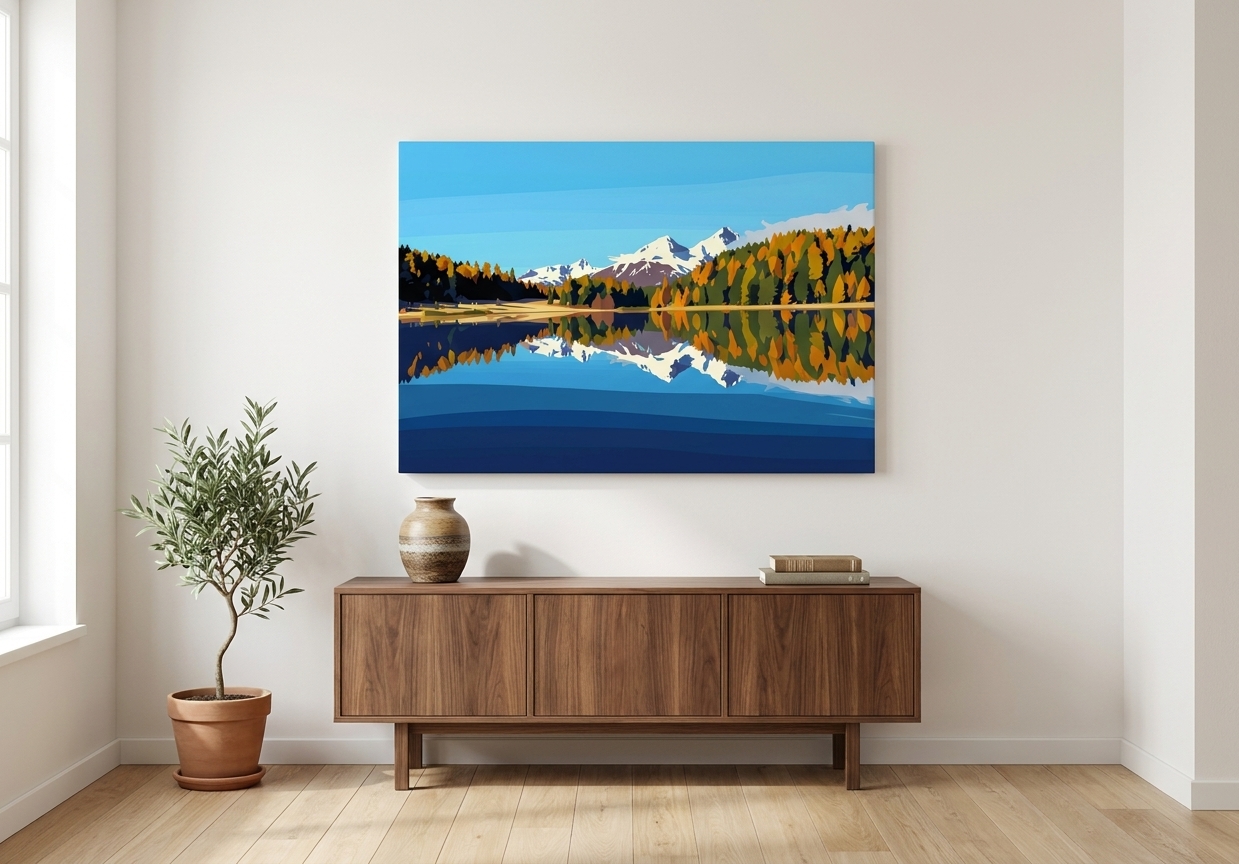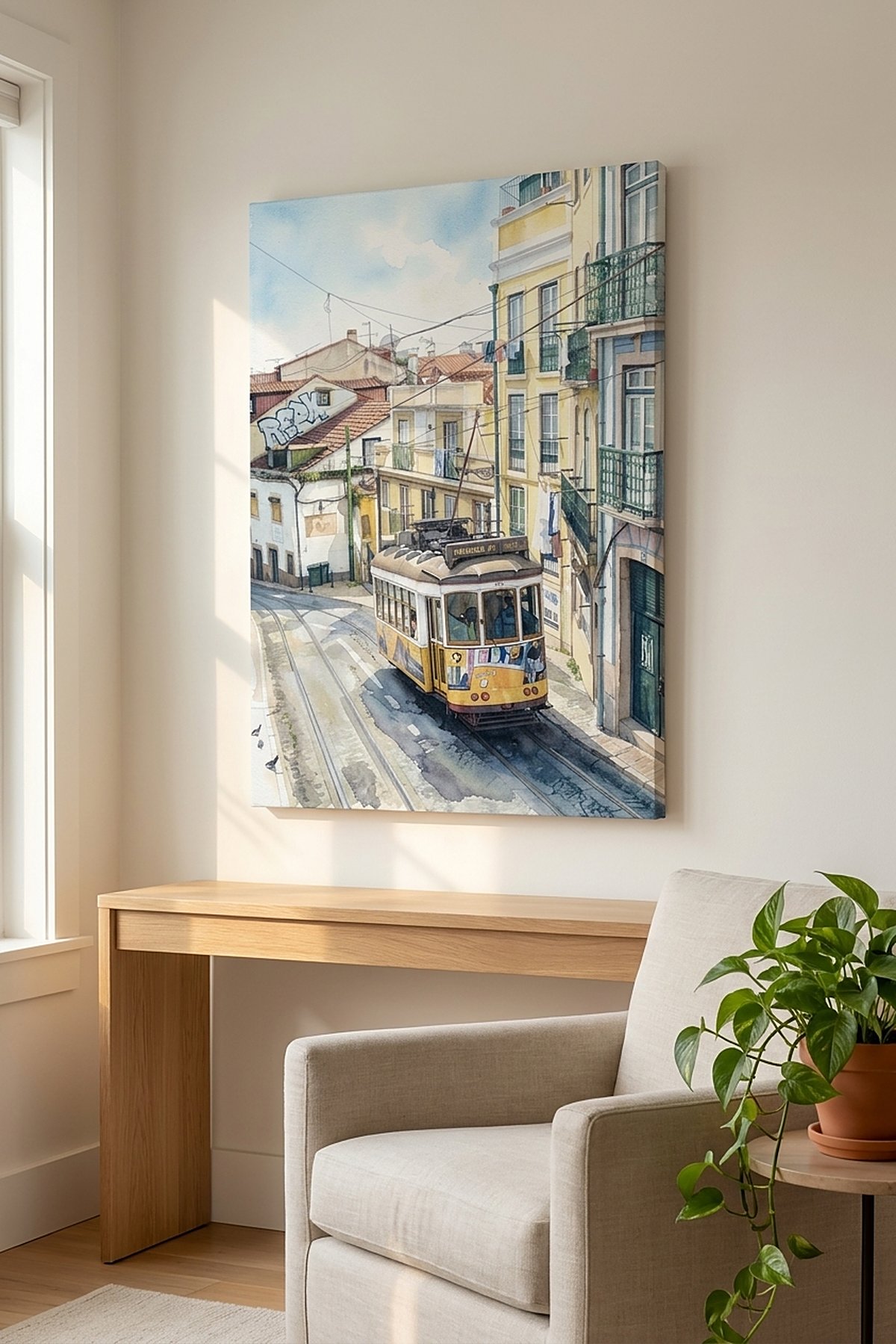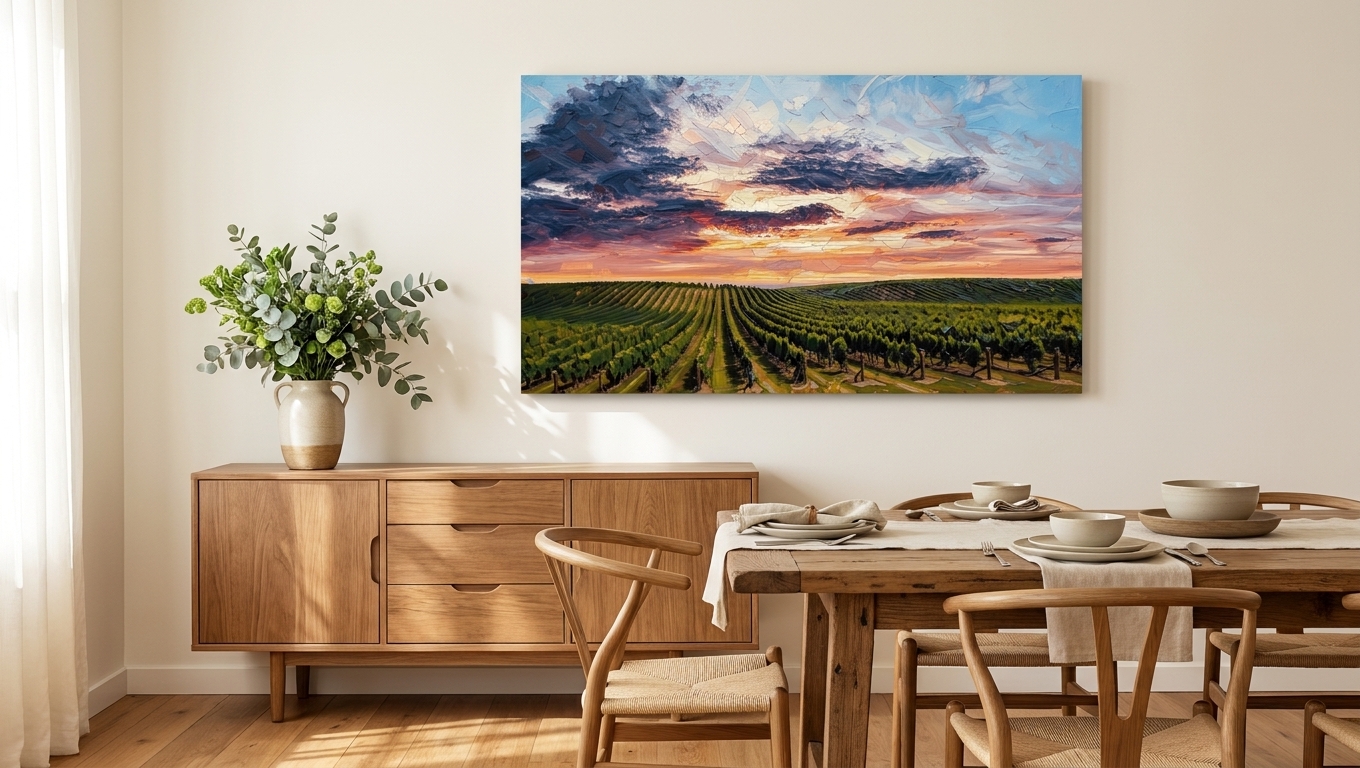
There’s a blank stretch of wall above the sideboard, or along the table, and you’ve been looking at it for months. A new sideboard, a fresh coat of paint, people coming to eat: something finally made it feel urgent. So you search “dining room wall art” and scroll. It’s a “Gather” sign. It’s a pair of grey botanicals that could hang in any hotel corridor. It’s all fine, and none of it is yours.
Meanwhile your camera roll has the real thing: the vineyard from that holiday, the fruit stall at the market, the flowers you grew. Any of those could be the painting on the wall.

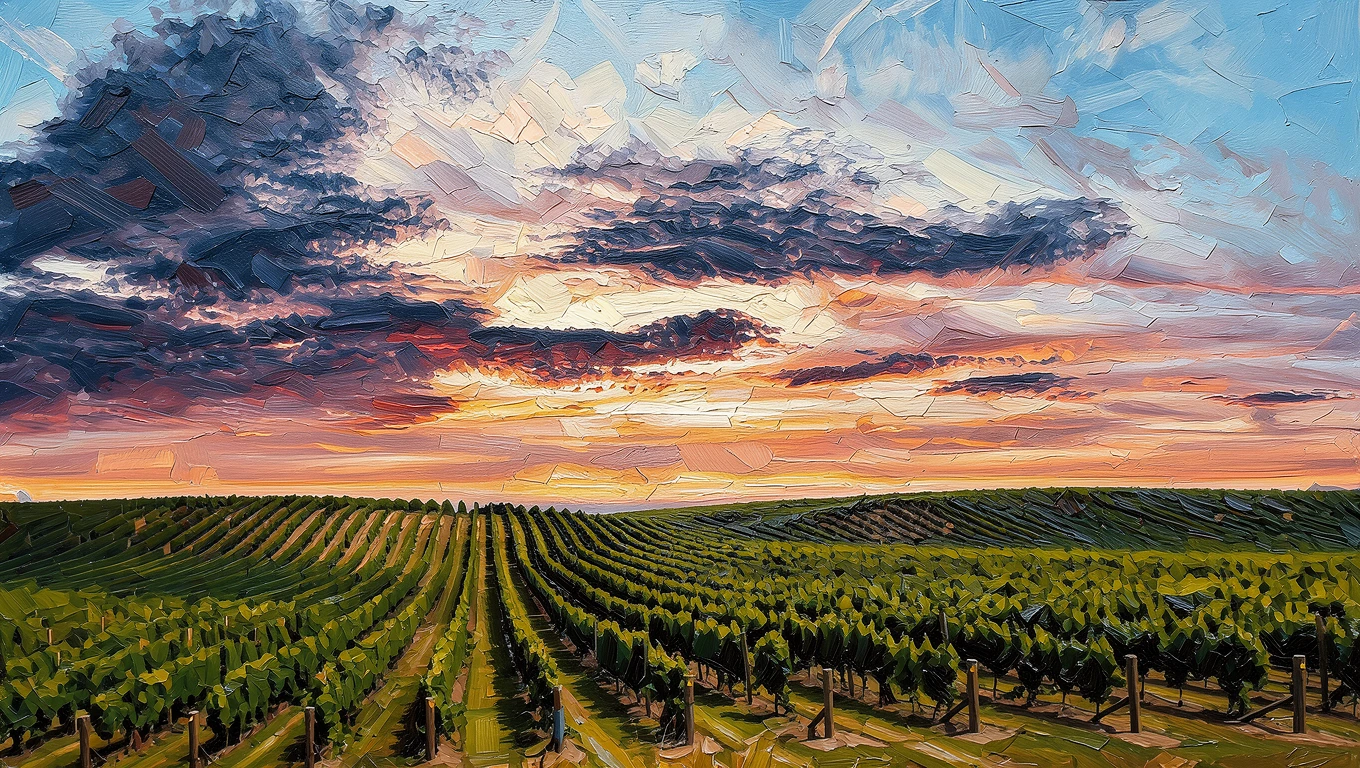 Photo Painting
Source photo by AnastasiaNZ via Pixabay. After: generated with ReArt.
That’s a sunset vineyard, rows running off to the horizon, turned into an oil painting. A calm landscape like this gives a dining wall weight without asking for attention, and it doesn’t compete with the table. It just holds the wall while dinner goes on.
Why your own photo beats a store print
A store print is made to suit everyone, so it ends up suiting no one in particular. A painting of a place you actually care about is a different object. Guests ask about it, and you get to say “that’s the hillside near where we stayed” instead of “we just liked the colours.”
Which photos make good dining room wall art
The test is simple: one clear subject, decent light, and a mood you’d happily eat dinner under. Photos that tend to paint well:
- Landscapes. Vineyards, hills, coastline, an orchard at harvest. Wide scenes suit the long, horizontal wall above a sideboard.
- Still lifes and botanicals. A bowl of fruit, a loaf of bread, a laid table, a branch or a bunch of flowers on a plain background. If you grew the flowers yourself, even better.
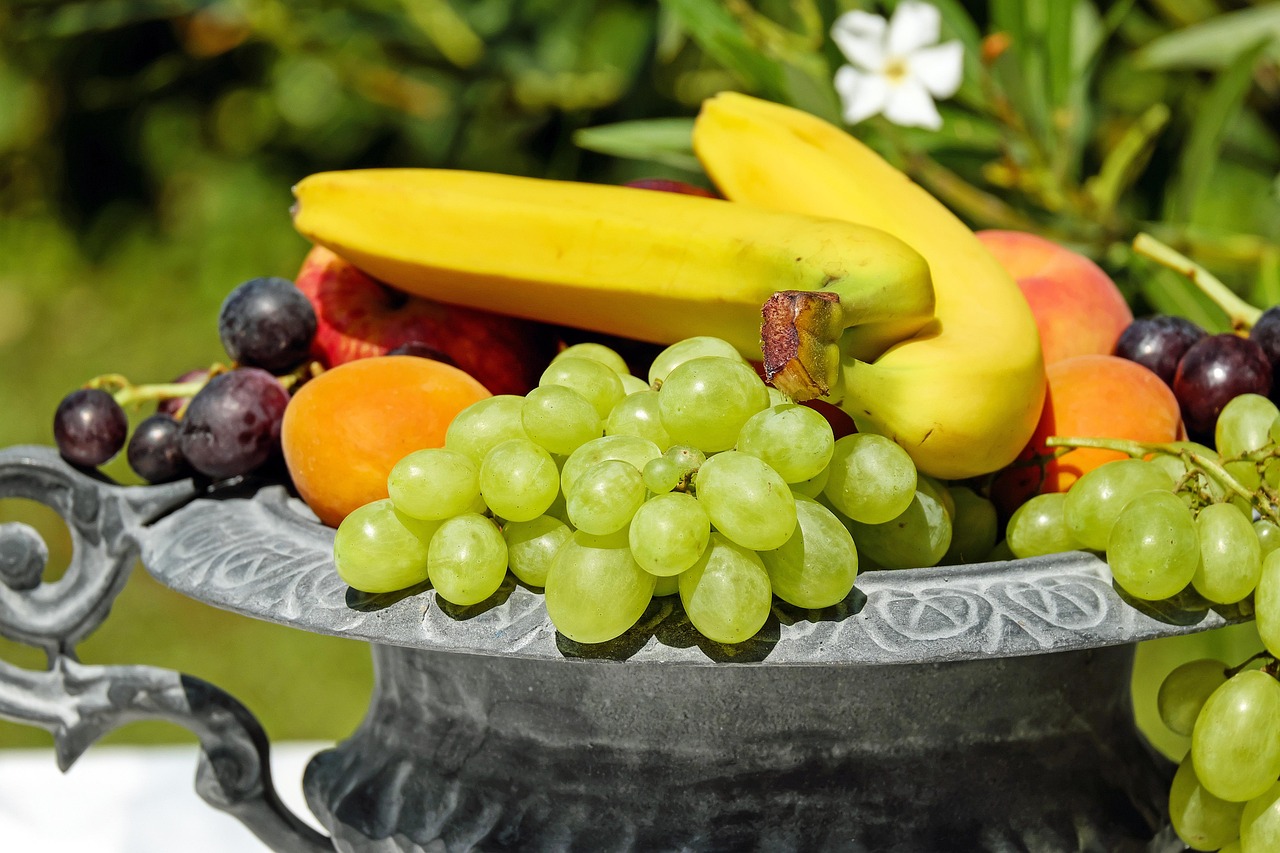
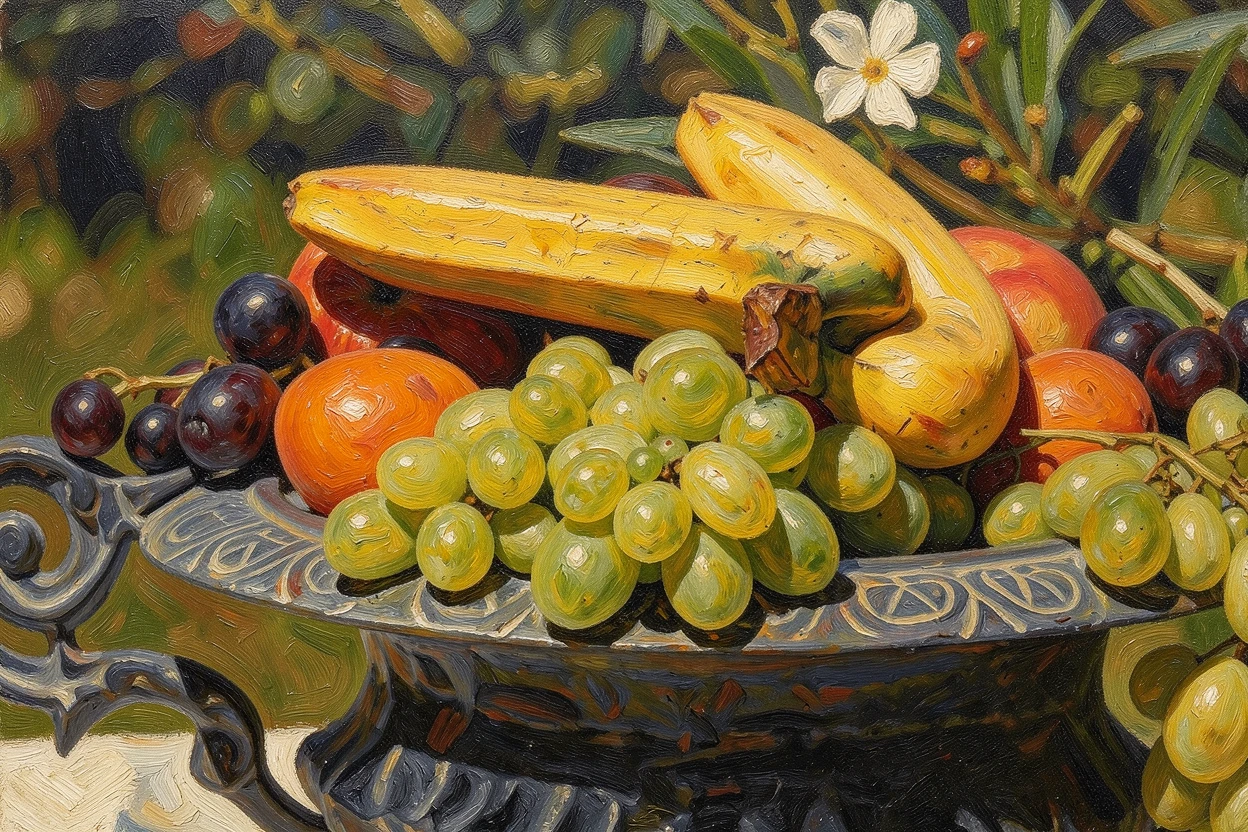 Photo Painting
Source photo by Couleur via Pixabay. After: generated with ReArt.
That’s a fruit bowl shot in a garden, turned into a warm painting. The colours of the fruit sit well with a dining table, and nothing on the wall competes with the food.
What struggles: busy snapshots, crowds, selfies, and dark low-light shots. File quality matters too — a normal phone photo is fine, but a screenshot or a photo forwarded through a chat app has usually lost too much to paint cleanly. If the original is murky or cluttered, the painting will be too. Pick the cleanest, brightest version of the moment you have.
Match the style to your dining room
A dining room usually wants warm and calm over loud. Three styles that do that well:
Oil is bold and structural, with real presence. It’s the one for a statement piece over the sideboard, and it suits warm wood and good lamplight — though on a very dark wall it can feel heavy, so give it light around it.
Golden Impressionism is warm and full of light. It suits fruit, flowers and sunny scenes, and works against a cream or terracotta wall.
Watercolour Wash is the softest of the three. It’s right for a bright, quiet room, or a photo with a lot of white in it. On a dark wall it can disappear, so keep it where there’s light.
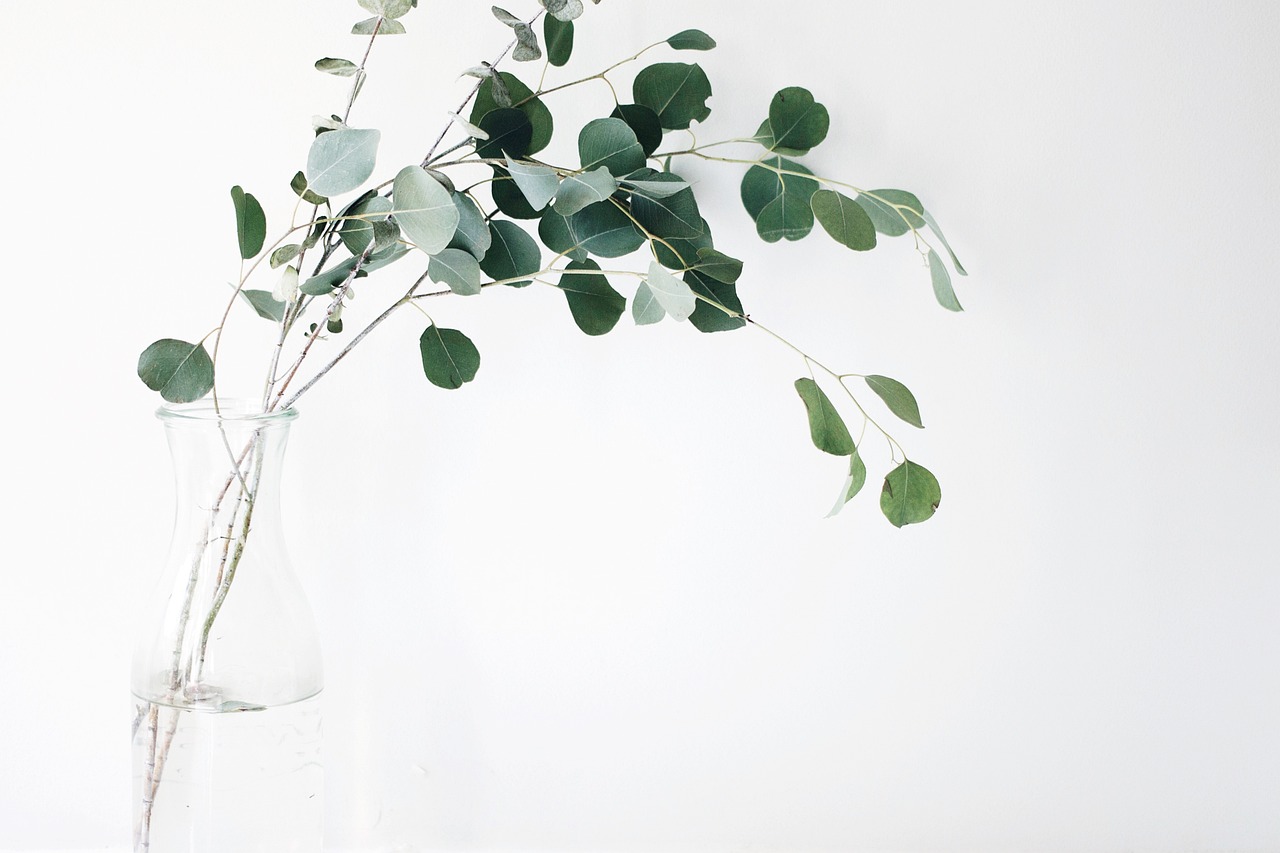
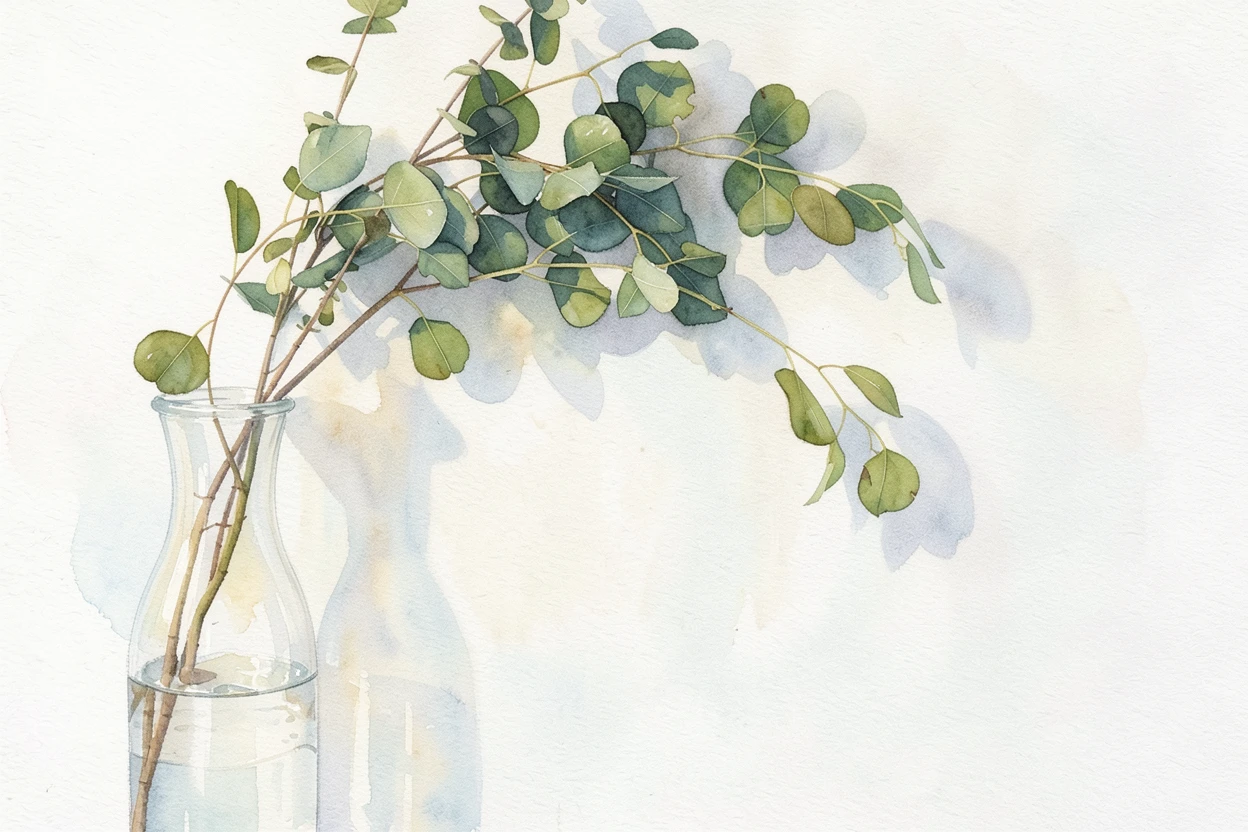 Photo Painting
Source photo by StockSnap via Pixabay. After: generated with ReArt.
That’s eucalyptus in a glass vase, turned into a watercolour wash — pale and airy, which is what you want if your dining room is light and you’d rather the wall stay quiet. The one style we’d steer you away from here is Vibrant Abstract: it’s lovely elsewhere, but at a table it tends to be too loud for a meal.
Canvas or poster, and how big
We print canvas and poster. For a dining room, canvas is usually the better call: it’s gallery-wrapped and frameless, so there’s no frame to choose, no glass, and no glare off the candlelight. A poster costs less, but a bare poster looks unfinished until it’s up, so you’d frame it yourself. (If you’re weighing the two, we go deeper in canvas vs poster prints.)
On size, measure the wall before you choose. A good rule of thumb above a sideboard is that the art spans about two-thirds of the furniture’s width. Our largest canvas is 60 × 90cm, hung landscape — so on a 150cm sideboard, 90cm covers about 60% of the width, which still looks deliberate. Above a really wide run of furniture, a single piece at the maximum will read a little small on its own; there it helps to let a lamp or a tall plant share the wall, and I’d rather say that plainly than sell you something that’ll look lost. Hang it so the bottom edge sits roughly 15–25cm above the sideboard, and it reads as one group with the furniture. To be sure, cut paper to 90 × 60cm, tape it to the wall, and live with it for a day — two minutes that saves a lot of second-guessing. (For more on getting the file and sizing right, see how to print a photo to canvas.)
The honest part
This is AI-generated from your photo, then printed. No one is standing at an easel. What that buys you is the preview: you see your actual photo, in the style you chose, on screen at full size, before you spend anything. If it doesn’t look right, you can try another style or another photo before you decide.
One honest limit: fine detail can shift — faces, small text on a sign, a tiny object in the corner — so zoom into the preview before you order. That preview is exactly where you catch it. It isn’t a hand-painted original; it’s your photo, repainted in a style you picked, printed on canvas or poster.
If you’ve got a photo in mind, upload it and preview it as dining room wall art.